MapperHealth Researchers Contribute to Peer-Reviewed Alzheimer's Treatment Study

By MapperHealth
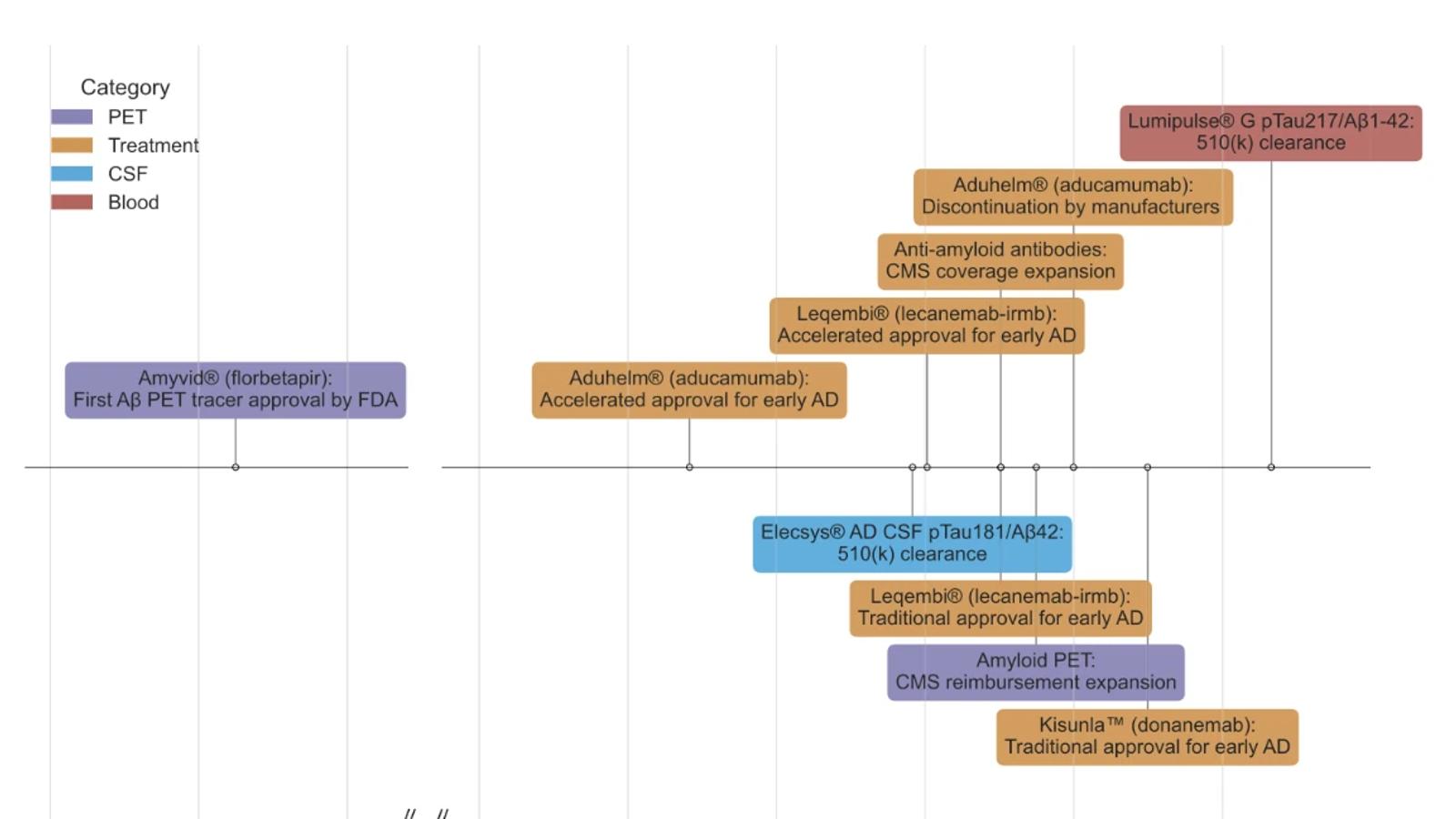
A 2026 study published in Alzheimer's & Dementia, the peer-reviewed journal of the Alzheimer's Association, examines how the rollout of lecanemab (the first widely covered anti-amyloid drug for early Alzheimer's) and newly covered diagnostic testing has changed real-world testing and treatment patterns across the Mayo Clinic enterprise from 2019 through early 2025. A team from MapperHealth contributed to the work alongside colleagues from Mayo Clinic Arizona, Rochester, Jacksonville, and Vanderbilt.
Figure 1 from Robb et al., Alzheimer's & Dementia (2026): Regulatory milestones for Alzheimer's disease biomarkers and treatments, 2011–2025.
The full paper is available here. A few findings that stand out:
Plasma biomarkers are taking off. A blood test called p-tau217 went from zero clinical use to the most-ordered Alzheimer's biomarker in just a few quarters. p-tau217 is a protein fragment detectable in blood that correlates with Alzheimer’s pathology in the brain. Spinal taps for CSF testing dropped. PET scans grew.
APOE genotype appears to be driving treatment decisions. Patients carrying two copies of APOE ε4 (the highest-risk variant for late-onset Alzheimer's) were almost ten times less likely to start lecanemab than patients with the more common ε3/ε3 genotype. The reason is safety: ε4/ε4 carriers have a much higher risk of a side effect to the drug called ARIA (amyloid-related imaging abnormalities), and clinicians are using APOE genotype to weigh whether the risk-benefit math works for an individual patient. Lecanemab carries an FDA warning about ARIA risk specific to APOE ε4/ε4 carriers.
This is pharmacogenomics in practice: providers are checking a genetic variant before prescribing, weighing the safety profile against the patient's genotype, and adjusting the treatment plan accordingly.
A note on MapperHealth. APOE is one of the markers included in MapperHealth's genomic health report. As this study illustrates, APOE status is already informing treatment decisions at major health systems.
Sex differences in amyloid positivity. Across all three biomarker tests in this study cohort, women were more likely to test positive for amyloid than men. Whether that reflects underlying biology, referral patterns, or some combination is still being worked out, and the research team is following up on it.
Every treated patient had confirmed amyloid pathology. All 123 patients in the Mayo cohort who started lecanemab had a positive PET or CSF result before their first infusion. Lecanemab is a meaningful advance: the first FDA-approved drug shown to slow early Alzheimer's progression. It's also expensive (around $26,500 per year, per CMS 2024 pricing estimates) and requires careful patient selection.
MapperHealth authors on this study: David P. Upjohn, MS, and Christopher Conyers.
This post is for educational purposes only and does not constitute medical advice. APOE genetic testing has personal and family implications and should be interpreted with a qualified healthcare provider. Decisions about Alzheimer's screening, diagnosis, or anti-amyloid therapy require clinical evaluation by a treating physician.